

How Do You Make a New House Feel Like Home?
Last Updated: November 4, 2026
Quick Summary
To make a new house feel like home, start with the rooms you use most, then build outward in phases rather than unpacking everything at once. Unpack bedding, kitchen basics and bathroom supplies first, then layer in soft furnishings, warm lighting and meaningful objects. Small daily routines and a few familiar items help a new house feel like home within the first month or so.
- Make the bed, hang towels and set up a kettle in the first three days.
- Unpack bedding, towels, kitchen basics and cleaning supplies before anything decorative.
- Layer at least three textures in each living space and add one lamp per seating area.
- Under £50 buys reversible changes such as warm LED bulbs and a second-hand rug.
- Fit curtains or blinds for privacy before decorating, and start one weekly tradition.
Table of Contents
- Start With a Room-by-Room Settling-In Plan
- What to Unpack First When Moving House
- How to Personalise a New Home With Meaningful Objects
- How to Make a House Feel Cosy With Texture, Lighting and Scent
- Budget-Friendly Home Decor Ideas That Still Feel Considered
- Settling In Emotionally: Privacy, Routines and Belonging
- Frequently Asked Questions
Start With a Room-by-Room Settling-In Plan
The fastest way to make a new house feel like home is a staged plan, not a weekend of frantic unpacking. This guide breaks that plan into clear phases. The pattern is consistent: tackle the rooms you use most, then build outward.
A new house needs time. Rushing the whole property at once leaves every room half-done.
Days 1-3: The Rooms That Matter Most
Start with the rooms you touch first and last each day. Bedrooms, bathrooms and the kitchen come before the spare room or the hallway.
- Make the bed and hang towels on day one
- Set up a kettle, mugs and tea in the kitchen
- Put soap, loo roll and a clean towel in the bathroom
- Place one lamp in each main room
These small moves stop the house feeling like a building site. They also give you a base to work from.
Weeks 1-4: Layer in Comfort and Character
Phase two is where the house starts to feel personal. Add soft furnishings, wall art and a few meaningful objects to each room, one room at a time.
Work through the house in order of use. Living room first, then bedrooms, then hallways. Keep a running list of what each room still needs. This stops you buying twice and helps you spot gaps.
Watch out: buying everything in one shopping trip usually means a room full of mismatched pieces. Buy slowly and let each room settle.
What to Unpack First When Moving House
Unpack the essentials for daily living before anything decorative. Bedding, kitchen basics, bathroom supplies and a change of clothes should come out of boxes in the first few hours. Everything else can wait.
Here is the order we would follow:
- Bed linen and pillows
- Towels and bathroom basics
- Kettle, mugs, plates and cutlery
- Cleaning supplies and bin bags
- Phone chargers and a lamp
- Toiletries and a first-aid kit
- One week of clothing per person
Label boxes by room before the move if you can. It saves hours of searching later.
How to Personalise a New Home With Meaningful Objects
A house feels like yours when your story is on the walls. Photographs, artwork and objects with memories do more for a room than any matching furniture set.
Start with one shelf or one wall. Group family photographs, a few pieces you have carried between homes, and something you made or were given. These personal touches anchor a room.
- Frame a small set of family photographs for the hallway
- Hang wall art you already own before buying new pieces
- Display objects with a story, not just objects that match
- Keep one shelf for things that make you smile
The aim is a sense of belonging, not a showroom. A lived-in room with your memories beats a perfect but anonymous one.
How to Make a House Feel Cosy With Texture, Lighting and Scent
Cosy rooms share three things: soft texture, warm light and a familiar scent. Get those right and even a bare new build starts to feel comfortable.
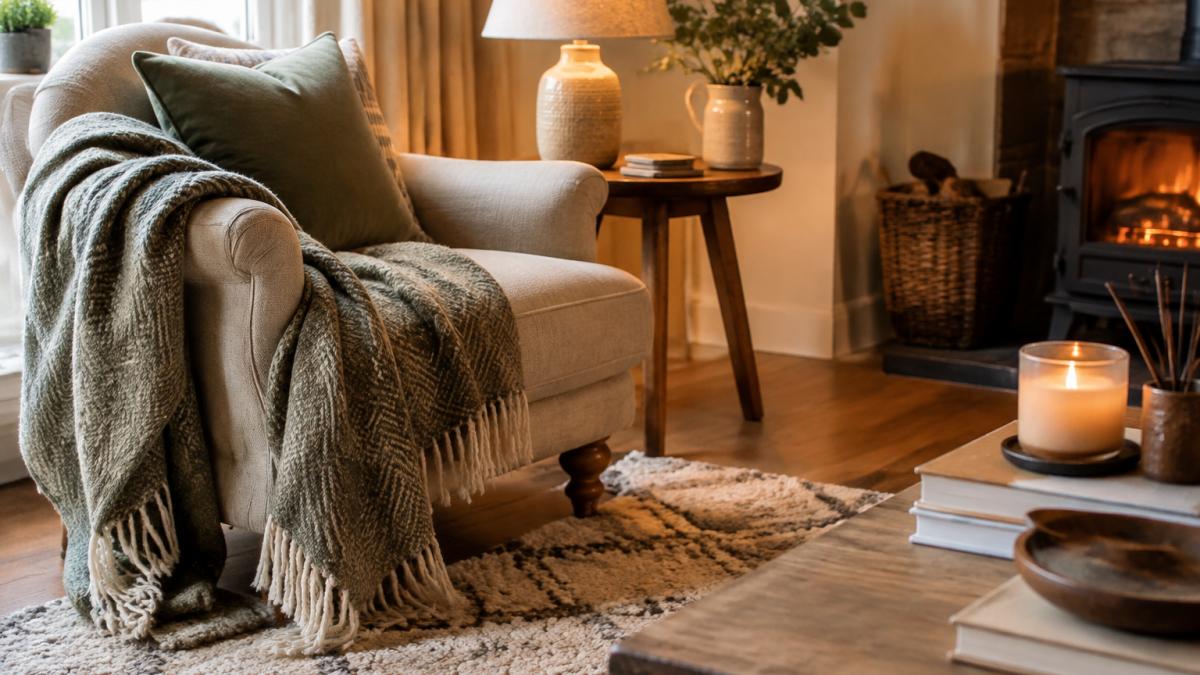
Texture comes from rugs, cushions and throws. Layer a wool throw over a chair, add a deep-pile rug, and mix a linen cushion with a chunky knit one. Texture softens hard floors and empty corners.
Lighting should come from several small sources, not one bright ceiling light. Table lamps, floor lamps and warm bulbs make a room feel calm in the evening.
Scent is the fastest shortcut to comfort. A candle, a diffuser or a simmering pot of spices can make a new space smell like somewhere you have always lived.
- Layer at least three textures in each living space
- Swap cold white bulbs for warm ones
- Add one lamp per seating area
- Choose a signature scent and use it in the main rooms
Budget-Friendly Home Decor Ideas That Still Feel Considered
You do not need a big budget to make a new house feel like home. What matters is spending in the right order and knowing which changes you can take with you when you leave. Group your options by cost and by how permanent they are, and you can personalise a rental or a first home without wasting money or breaching a tenancy agreement.
Three budget tiers
Under £50, instant, reversible changes. These are the moves to make in the first week. Rearrange furniture you already own, move artwork to a different wall, swap cushions between rooms, and add warm LED bulbs to the lamps you use most.
£50-£250, a weekend of considered upgrades. Fresh paint on one wall is often the highest-impact change in a new home.
£250+, save for the rooms you use most. A made-to-measure blind, a freestanding shelf unit or a piece of furniture with character is worth waiting for. Buying slowly avoids the mismatched-room problem and spreads the cost over the first year.
Renter-friendly changes and permissions
If you rent, check your tenancy agreement before fixing anything to the walls. A common pattern is that landlords allow picture hooks but not shelves or wall-mounted lights without written permission.
For owners, the trade-off is different: permanent changes cost more but add value and can be done once.
Best for: renters, first-time buyers and anyone settling in on a tight budget. Skip if: you are mid-renovation and want a permanent finish, in that case, spend on the fabric of the building first and decorate later.
Spending in the right order keeps costs down, so here are the three budget tiers the guide sets out.
| Budget tier | What it covers | Example changes |
|---|---|---|
| Under £50 | Instant, reversible changes | Rearrange furniture, swap cushions, warm LED bulbs, second-hand rug |
| £50-£250 | A weekend of considered upgrades | Fresh paint on one wall, cushion covers, floor lamp, frames, deep-pile rug |
| £250+ | Save for the rooms you use most | Made-to-measure blind, freestanding shelf unit, furniture with character |
Settling In Emotionally: Privacy, Routines and Belonging
Feeling at home is as much emotional as visual. A new house can feel unfamiliar, unsettling or even slightly unwelcoming for weeks, and that is normal. Privacy, routine and a sense of belonging turn a house into your home, but they build slowly and cannot be rushed by decorating alone.
Expect an adjustment period
Most people find the first fortnight is the hardest. The sounds are different, the light falls differently and nothing is where your hands expect it to be. Give yourself permission to feel unsettled without treating it as a problem to solve.
Homesickness is common after a move, even a short one. Keep a few familiar objects visible, a favourite mug, a photograph, a blanket, and stay in touch with the people and places you left behind. Invite someone round as soon as the main rooms are usable; shared meals and conversation do more for belonging than any decor.
Privacy first
Add curtains or blinds to bedrooms and living rooms before anything else. Good screening makes a space feel private and calm, and it is the quickest way to stop a new house feeling exposed. If you rent and cannot fit blinds, tension rods and freestanding screens are workable alternatives.
Build small routines
Routine is what turns a house into a home you can navigate without thinking. Set two or three simple daily habits: a morning coffee in the same chair, an evening tidy-up, a walk around the neighbourhood at the same time each day. Add one weekly tradition, a Friday film night, a weekly bake, a Saturday morning plant-watering ritual. These small repetitions build familiarity faster than a decorating spree.
Create a sense of belonging
Belonging comes from participation, not presentation. Learn the names of the neighbours, find your local shop and park, and put something of your own story on the walls. Keep one shelf for things that make you smile, and display objects with a story rather than objects that match. A lived-in room with your memories beats a perfect but anonymous one.
Watch out: comparing your new home to a finished, styled interior online in the first month is a fast route to dissatisfaction, most of those rooms took years to assemble, and yours will too.
- Fit curtains or blinds for privacy before decorating
- Set two or three simple daily routines
- Start one weekly tradition
- Invite friends or family over within the first month
- Keep familiar objects visible during the adjustment period
Frequently Asked Questions
How long does it take for a new house to feel like home?
Most people start to feel settled within the first month, once the rooms they use daily are functional and familiar. A deeper sense of belonging usually builds over three to six months as you add personal touches, establish routines and make small changes like hanging artwork or arranging soft furnishings. There is no fixed deadline, so focus on the rooms you use most and let the rest of the house catch up as time and budget allow.
What should you unpack first when moving into a new house?
Unpack the rooms you use every day before anything else: the kitchen, bathroom and bedrooms. Set up a kettle, mugs, basic cookware and toiletries on day one, then make the beds with fresh linen so the first night feels calm. Keep a labelled box of essentials, including chargers, cleaning supplies and a change of clothes, separate from the rest of the move so you are not searching through boxes when you are tired.
How can you make a new house feel like home on a budget?
Budget-friendly home decor ideas often work better than expensive ones because they are easier to change. Rearrange furniture you already own, add a rug or cushions in a colour you love, hang family photographs and bring in a plant or two. Fresh paint on one wall, a warm lamp instead of overhead lighting and a familiar scent can shift the atmosphere of a room for very little. Start with the room you spend the most time in and build from there.
How do you make a new house feel personal?
Personalise a new home by displaying things that carry meaning: photographs, artwork, books, objects from trips and pieces with a story behind them. Group items by room rather than spreading them thinly, and mix in pieces that reflect your own style rather than following a single trend. Adding a meaningful piece gives a room a focal point that feels unmistakably yours.
Turning a new house into a home takes time, patience and a few well-chosen pieces. At Yellow Rose Living, we curate home decor and lifestyle accessories that help you do exactly that, with distinctive items that blend beauty with function. Our collection is built for people who want their space to reflect their own style, not a catalogue. Explore our curated home and lifestyle range and start making your new house feel like home.
