

Home Decorating Ideas on a Budget: A Practical UK Guide
Quick Summary
Home decorating ideas on a budget work best when you set a spending limit for each room before buying anything. Start with free changes such as decluttering and rearranging, then add textiles and warm lighting before spending on furniture.
- Set a clear spending limit for each room before you buy anything.
- Declutter first by removing one third of what sits on your surfaces, which costs nothing.
- Add a rug before cushions, since a rug anchors the seating area and hides worn flooring.
- Swap harsh overhead bulbs for warm-white bulbs and add a lamp in the corner furthest from the window.
- If you can only do one thing this month, paint the wall behind the bed.
Table of Contents
- Start With a Budget and a Plan
- Budget Living Room Ideas That Change the Feel of a Room
- Budget Bedroom Decorating Ideas for Less
- DIY Home Decor Ideas and Handmade Accents
- How to Make a Home Look Expensive on a Budget
- Rental-Friendly and Reversible Decorating Options
- Choosing Your First Three Projects This Weekend
- Frequently Asked Questions
Start With a Budget and a Plan
Home decorating ideas on a budget work best when you know your number before you buy anything. People who set a clear limit for each room tend to spend less and finish with a space they actually like. Without a plan, a £20 cushion here and a £60 lamp there quietly add up to far more than you meant to spend.
Start by listing every room you want to change. Then rank them by how often you use each one. The living room and bedroom usually win, so they deserve the first slice of your budget.
Next, split your total into three buckets:
- Essentials: paint, a rug, or storage you genuinely need
- Feel-good upgrades: cushions, throws, and vases that change the mood
- Reserve: a small pot of money for mistakes or surprises
Most people skip the reserve. Keep it anyway. A paint colour that looks warm on a sample card can look cold on a whole wall, and that reserve covers the fix.
Watch out: Buying everything at once often means buying the wrong things. Live with a new colour or rug for a week before you add more.
Budget Living Room Ideas That Change the Feel of a Room
The living room usually gives the biggest visual return per pound spent, because it is the room guests see and the one you use most. The trick is to work in layers, starting with the cheapest changes and only spending more once you know what the room actually needs.
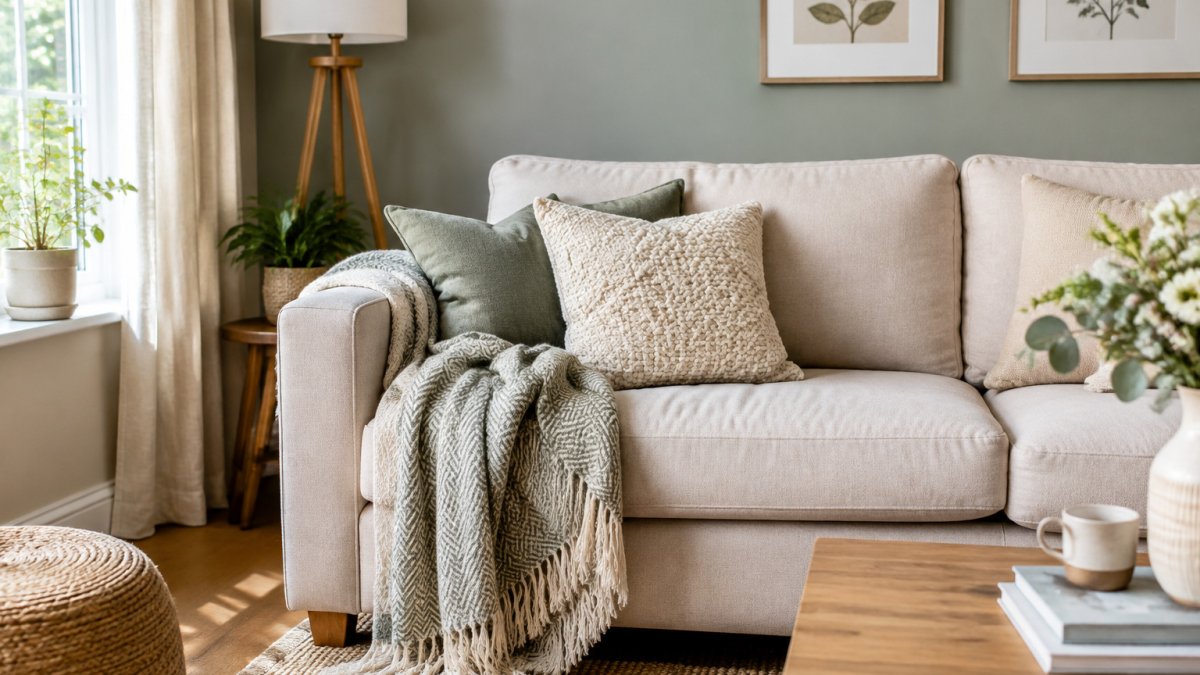
Start with a free edit
Before you buy anything, clear every surface and remove one third of what is on it. Straighten frames, hide cables and group remaining objects in odd numbers. Many people find the room already looks calmer, which tells you whether the problem was clutter or colour. This step costs nothing.
Layer textiles in a deliberate order
Textiles change the feel of a room faster than paint and are easy to reverse. Work in this order:
- Rug first. A rug anchors the seating area and hides worn carpet or floorboards. Measure your space before ordering, because a rug that is too small makes a room feel smaller.
- Cushions second. Pair one textured cushion with one plain cushion per seat. Two textures and two colours are enough; more starts to look busy.
- Throw last. Drape a throw over one arm of the sofa rather than folding it neatly, which reads as deliberate rather than staged.
A patterned rug does more work than a plain one because it hides small marks on a budget sofa. If you already own a plain rug, add a textured throw in a contrasting tone instead of buying new.
Fix the lighting before you buy furniture
Harsh overhead bulbs flatten a room. Swap them for warm-white bulbs and add one floor lamp or table lamp in the corner furthest from the window. Warm light at eye level makes any room feel more expensive, and if you already own lamps this costs only the price of a bulb. A common pattern is to spend on a new sofa when a £5 bulb and a repositioned lamp would have changed the room more.
Know where the money goes
A realistic breakdown for a typical living room refresh:
- Free: decluttering, rearranging furniture, rehanging pictures, swapping bulbs between rooms
- Under £25: warm-white bulbs, a cushion cover, a small plant, a frame from a charity shop
- Under £50: a throw, a pair of cushion covers, a table lamp, a mirror from a car boot sale
- Under £100: a 120 x 170 cm rug, a floor lamp, a second-hand armchair
- Over £100: only once the cheaper layers are in place and you know exactly what is missing
Prices vary most on rugs and lighting, depending on material and size. Buy the cheapest version that fits your measurements first, live with it for a week, then decide whether to upgrade.
Watch out: Buying a rug before measuring the seating area is the most common expensive mistake. A rug that sits under only the front feet of the sofa looks mean; one that extends at least 20 cm beyond each side looks intentional.
Edit, don't add
Once the layers are in, remove anything that does not earn its place. Fewer, better objects almost always look more intentional than a crowded shelf, and editing is the only step that costs nothing at all.
Budget Bedroom Decorating Ideas for Less
Bedrooms reward a small budget because the bed and bedding set the tone, and everything else is secondary. The aim is to make the room feel calm and cared for without spending on furniture you do not need.
Work from the bed outwards
Start with what you touch every day. A throw at the foot of the bed and two cushion covers in a texture that contrasts with the duvet add comfort for a modest budget. If you already own spare cushion inserts, buy covers only, which costs less than a filled cushion. Choose one texture (bouclé, linen or waffle) and one plain tone; mixing three textures in a small room looks cluttered rather than layered. You can shop cushions that soften a bedroom in these textures and tones.
Paint one wall, not four
A single accent wall in a deeper shade gives the room a focal point and costs one tin of paint rather than three. Keep the other walls light so the room still feels open, and paint the wall behind the bed rather than the window wall, because a dark wall beside a window makes the room feel smaller during the day. Choose a mid-sheen emulsion and check the coverage on the tin before buying.
Prepare properly: fill nail holes, sand the edges, and use a mist coat on new plaster. Skipping preparation is the main reason a cheap paint job looks cheap.
Declutter the bedside surfaces
One lamp, one plant and one small dish look calmer than a crowded table. If you need storage, a lidded basket under the bed hides clutter without buying furniture. Clear the top of the wardrobe and the floor beneath the bed as well; visible storage reads as mess even when it is tidy.
A realistic bedroom budget
- Free: declutter, rearrange furniture, swap bedding between rooms, move a lamp from another room
- Under £25: a pair of cushion covers, a warm-white bulb, a small plant, a charity-shop frame
- Under £50: a throw, a set of bedding, a bedside lamp, a laundry basket
- Under £100: one tin of paint and materials for an accent wall, a rug beside the bed, a second-hand bedside table
- Over £100: only once the textiles and paint are in place and you know what is missing
Buy the cheapest version that fits your bed size first and upgrade only if it wears out.
Handmade Ceramic Doughnut Vase →
Rental-friendly and reversible options
If you rent, keep changes reversible. Use removable wallpaper on one wall rather than paint, choose freestanding lamps instead of wall lights, and hang curtains from a pressure-mounted rod inside the window frame. Rugs and throws travel with you when you move. Always check your tenancy agreement before fixing anything to the walls; a quick message to your landlord first saves trouble later and protects your deposit.
Watch out: Painting a rental bedroom without written permission is the most common way tenants lose part of a deposit. Removable wallpaper and freestanding lighting give most of the visual change with none of the risk.
Prioritise by impact, effort and cost
If you can only do one thing this month, paint the wall behind the bed. It has the highest impact for the lowest cost and takes a weekend. Add textiles next, then lighting, then storage. Working in that order means every pound spent builds on the last change rather than competing with it.
DIY Home Decor Ideas and Handmade Accents
Handmade pieces can give a room personality. You can make some yourself, or buy finished pieces when your time is short.
Simple DIY projects work well for beginners:
- Paint a plain vase or frame in one bold colour
- Sew a basic cushion cover from a fabric remnant
- Create a gallery wall from prints and charity-shop frames
If you prefer to buy, look for accents with a clear handmade feel. The Handmade Ceramic Doughnut Vase (£17.99) is a ring-form ceramic piece that works well alone or with a single stem. The Bohemian Hand-woven Macrame Cotton Cushion Cover (£43.79) is made from cotton and adds texture to a neutral sofa. You can browse ready-made macrame cushion covers if you would rather not sew your own.

Upcycling and Repurposing Existing Pieces
Upcycling is often the cheapest route of all. An old chest of drawers can get a fresh coat of paint and new knobs. A wooden tray can become a bathroom caddy. A plain jar can hold dried grasses or brushes.
The key is to choose pieces with solid construction. Paint hides cosmetic damage but not wobbly joints, so test the frame before you start.
How to Make a Home Look Expensive on a Budget
A room can look well cared for when the details are considered.
Focus on three things:
- Consistent colour: Stick to a palette of three or four tones
- Good textures: Mix linen, wool, ceramic and wood
- Clean lines: Hide cables, straighten frames and keep surfaces tidy
Mirrors help too. A large mirror opposite a window reflects light and makes a small room feel bigger.
Rental-Friendly and Reversible Decorating Options
Renting does not mean you cannot decorate. Many changes can be undone without losing your deposit.
Use removable options first:
- Removable wallpaper on one wall
- Freestanding lamps instead of wall lights
- Curtain rods that fit inside the window frame
- Rugs and throws you can take with you when you move
Always check your tenancy agreement before painting or fixing anything to the walls. A quick message to your landlord first saves a lot of trouble later.
Choosing Your First Three Projects This Weekend
You do not need to finish the whole house in one weekend. Pick three projects that give the most impact for the least effort and cost.
Good first projects include:
- Adding a rug and throw to the living room
- Painting one accent wall in the bedroom
- Styling one shelf with a vase, a plant and a book
| Project | Typical Time | Cost Level | Impact |
|---|---|---|---|
| Rug and throw | 1 hour | Low to medium | High |
| Accent wall | 1 day | Low | High |
| Styled shelf | 30 minutes | Very low | Medium |
Work through them in order, live with the results for a week, and then decide what comes next. Home decorating ideas on a budget are about steady, thoughtful changes, not one big spend.
Frequently Asked Questions
How can I decorate my home on a tight budget?
Start with the room you use most and set a fixed spend, such as £100 or £200. Prioritise changes that alter the whole room: repainting one feature wall, adding textiles like curtains and cushions, and rearranging existing furniture. Paint is usually the lowest-cost way to shift the mood of a space, while cushions and throws add colour and texture for relatively little money. Spend slowly, measure before buying, and wait a week before any larger purchase so you avoid impulse buys.
What can I update in a room without buying new furniture?
Many rooms can be refreshed without new furniture. Repaint cupboards or a wall, swap cushion covers, add a rug to define a seating area, and hang curtains higher and wider to make windows look grander. Changing lighting to warmer bulbs or adding a table lamp can also transform the atmosphere. Clearing surfaces and grouping accessories in odd numbers often makes a room feel more deliberate.
What are some easy DIY home decorating ideas?
Simple DIY projects include painting a plain vase or jar, sewing a cushion cover from an old curtain, creating a gallery wall from frames you already own. Repurposing a wooden crate as a shelf or painting a tray for a coffee table adds personality. Keep a small tool kit on hand, including a tape measure, sandpaper, a craft knife and masking tape, to make each project quicker and tidier.
How do I decorate a small living room on a budget?
In a small living room, choose light, neutral paint to make walls feel further apart, and use vertical storage such as tall shelves to keep the floor clear. Mirrors placed opposite a window reflect daylight and add depth. Pick a rug that is large enough for the front legs of the sofa to sit on, and choose a single statement piece rather than many small items to avoid clutter.
